carbon reduction plan, PPN 006 template, CRP template, PPN 026 requirements, UK procurement
Carbon Reduction Plan Template: 10 Options for PPN 006
By ESG Consulting Team · · 16 min read
A bid team opens a blank carbon reduction plan template two weeks before a submission deadline. The headings look manageable until someone asks for the latest Scope 3 figures, the baseline year, evidence behind the calculations and a director's signature. The document is only the visible part of the job: the supplier still has to assemble and explain the information that goes into it.
This guide compares ten options, from the official government form to guided tools and consultancy support. Rather than judging them by layout, it maps each to the work a supplier must complete: defining the organisational boundary, calculating emissions, documenting reduction measures and securing approval. For central-government procurements covered by PPN 006, the requirement generally applies to relevant contracts valued above £5 million per year, including VAT, according to the Cabinet Office's 2025 PPN 006 guidance.
A template can organise the disclosure, but it can't confirm that your reporting boundary is right or that your figures are supported. Choose a format your bid team can use, then check every field against the buyer's requirements and your underlying evidence.
Table of Contents
- 1. Cabinet Office / GOV.UK Official PPN 006 Template
- 2. Government Commercial Agency CRP Guide and Template
- 3. The Carbon Stamp PPN 006 Template and Support
- 4. Carbon Recycling Free Word CRP Template
- 5. Carbon Verify Guided CRP Builder
- 6. PEF Consulting Partners Free Word Template
- 7. Seedling CRP Guidance Template and Support
- 8. LUPC / UKUPC RP Network Expanded CRP Template
- 9. Trident Utilities CRP Template and Four-Step Guide
- 10. ESG Consulting
- How the carbon reduction plan templates compare on format, cost and best use
- Turn the Template Into an Assured Plan
1. Cabinet Office / GOV.UK Official PPN 006 Template
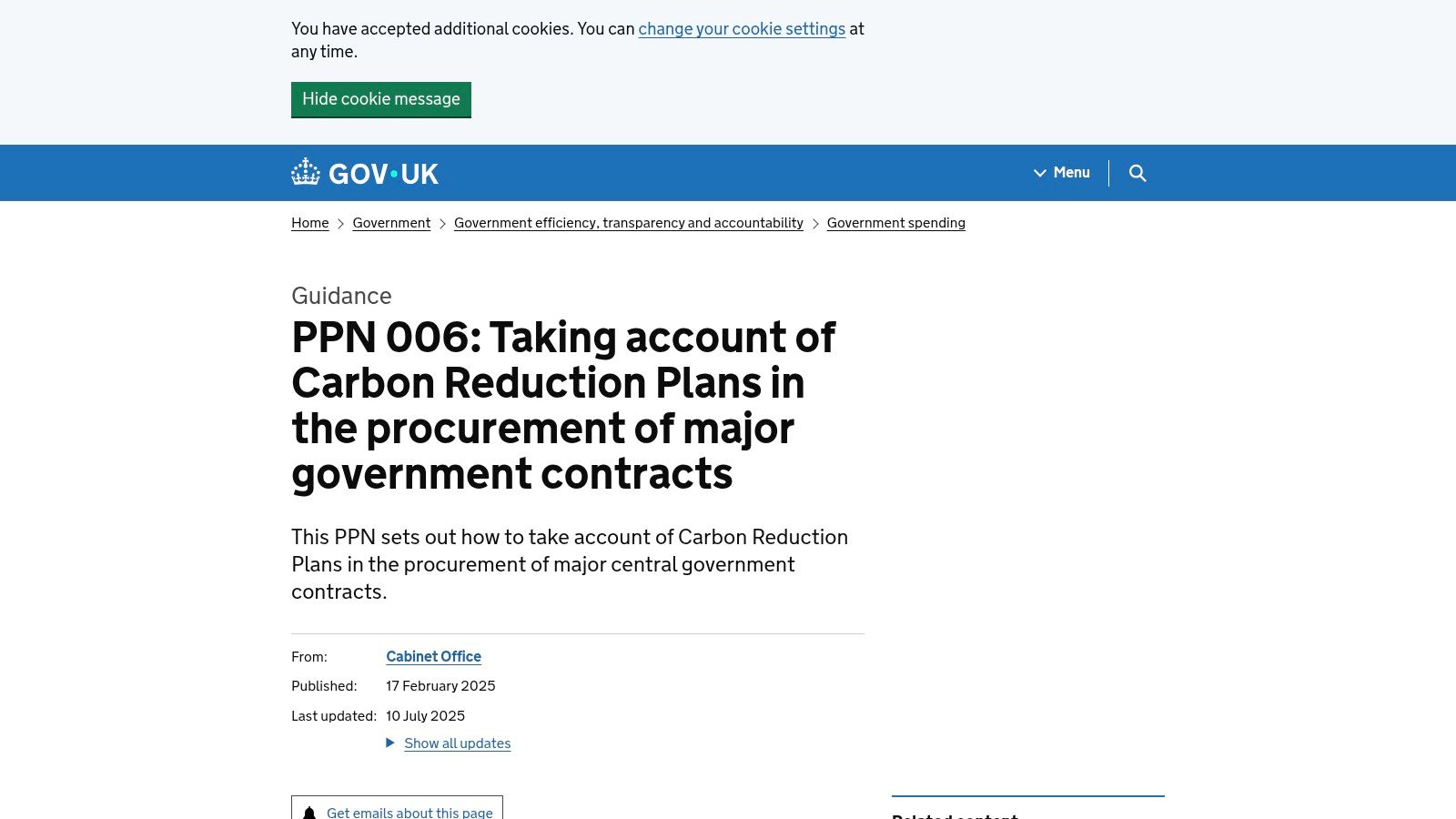
Start with the official form when the buyer's instructions point to PPN 006. The Cabinet Office's PPN 006 publication brings the government template together with procurement guidance, technical guidance and FAQs. That makes it the clearest reference for checking what the prescribed structure asks you to disclose.
The template is available as an ODT document. If your team works mainly in Word, check the file format before the deadline and make sure converting it doesn't alter tables, declarations or formatting. The form itself won't calculate your footprint, verify conversion factors or trace a figure back to a bill.
What the supplier still supplies
Use the official document as the structure, not as the evidence. The technical standard describes reporting across Scope 1, Scope 2 and specified Scope 3 categories, with a consistent reporting period. The government's technical standard for completing CRPs is the place to check how to prepare those disclosures and handle reporting decisions.
Before you fill in the form, assemble the reporting boundary, baseline and current-year calculations, methodology, reduction actions and approval details. Keep calculation files and source records alongside the finished plan. This option is strongest when your team already understands its inventory and needs the government's format; it's less helpful if you need support collecting or calculating emissions data.
2. Government Commercial Agency CRP Guide and Template
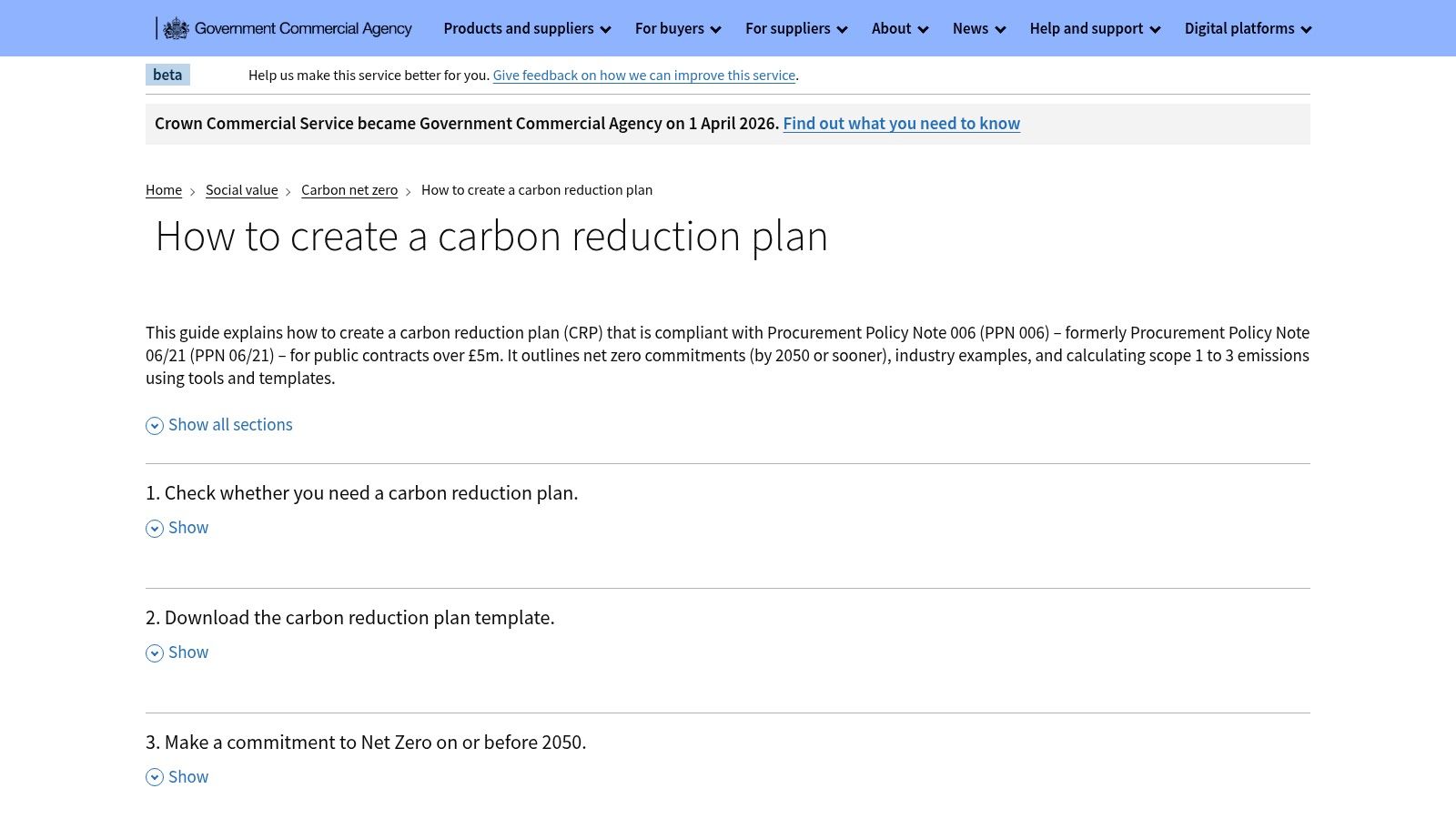
A blank form tells you where to write, but not always how to get there. The Government Commercial Agency's CRP guide adds practical instructions, links to a downloadable template and examples, and explains how a Carbon Reduction Plan fits into the procurement process.
That context makes this a useful starting point for a bid team that hasn't prepared a CRP before. The guide helps organise the work, including deciding whether a plan is needed and preparing emissions information. Its examples can show how a completed plan reads, but they're references, not text to copy. Your reporting boundary, company details, emissions and actions need to describe your own organisation.
Use the examples for structure, not substance. A supplier's activities, boundary and data sources may differ from yours, even when the headings match.
Supplier completion check
Confirm the buyer's requirements first, then use the guide to map the work to the relevant plan fields. Collect activity data and calculations for each emissions category, note where you've estimated figures, and assign someone to check the totals against the evidence. The guide doesn't replace the official technical standard or validate the numbers you enter.
The resource is free and more explanatory than a bare form, which helps when the team needs shared instructions. It won't remove the need to decide which information applies to your procurement or to get the right internal approval. Pick it if your team needs guidance as well as a document; pair it with the official technical rules and your own evidence records.
3. The Carbon Stamp PPN 006 Template and Support
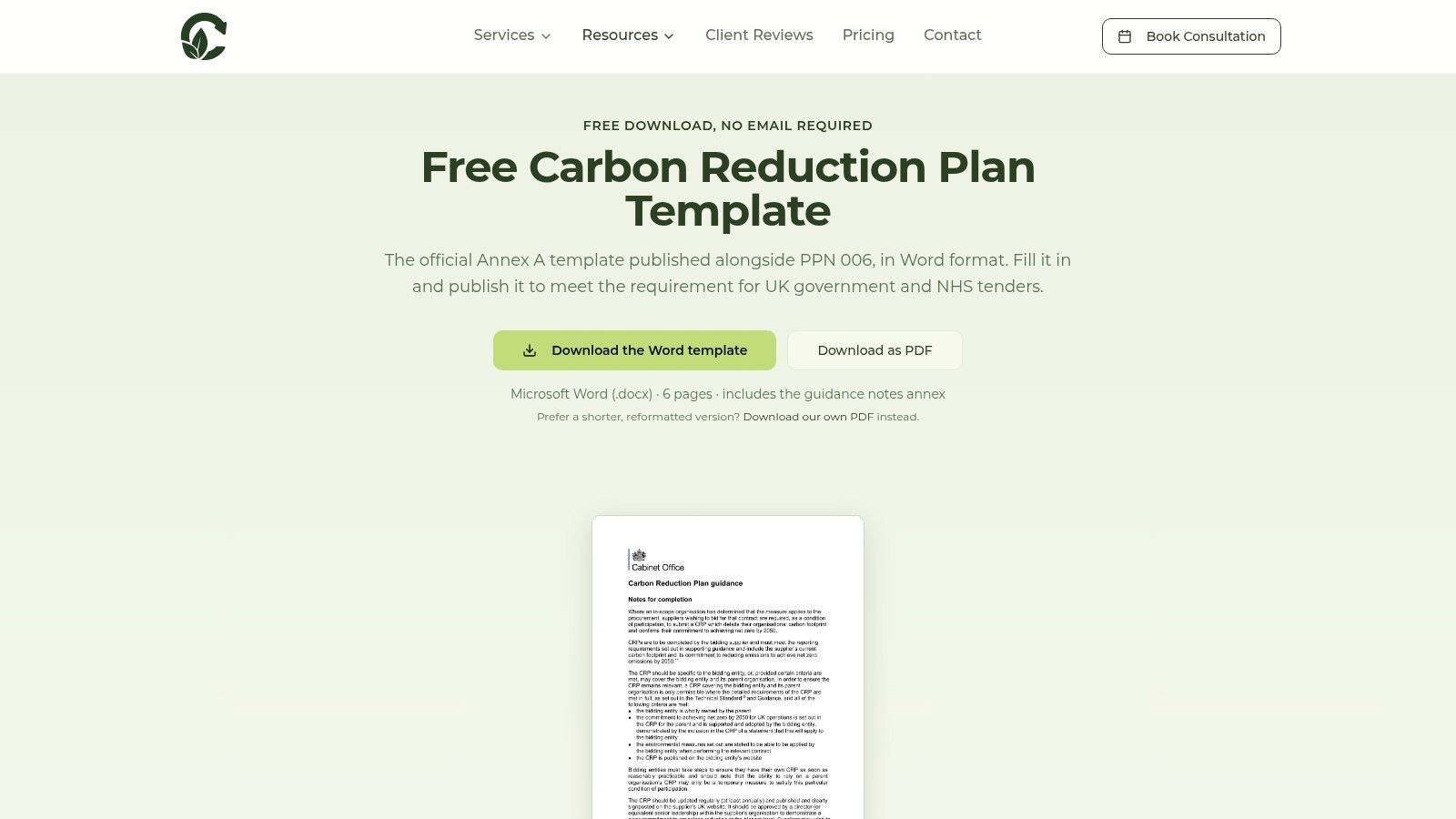
If your team prefers Word, The Carbon Stamp offers free editable Word and PDF versions of a template based on the PPN 006 Annex format. Its Carbon Reduction Plan template and guidance also brings together related checklist material and information about optional consultancy support.
The editable Word file is convenient for bid teams that need to work collaboratively or fit the form into an existing approval process. The PDF can be useful for reviewing the layout before committing to a version. Neither format confirms that your emissions data is correct, that you've included the required categories or that the buyer will accept a particular presentation.
Where the work remains
The supplier still has to define the reporting boundary, gather activity data, calculate the footprint and attach or retain evidence for the inputs. If you have a consultant prepare the plan, agree what the service covers, what evidence you must provide and who checks the final figures. Fees for optional support need to be confirmed directly.
Provider-published testimonials may help you understand the service's positioning, but they aren't independent reviews or assurance of your own plan. Treat the template as a convenient starting format, not a compliance guarantee. It suits teams that want an editable document and might need separate help with preparation; it won't replace a review against the current government requirements.
4. Carbon Recycling Free Word CRP Template
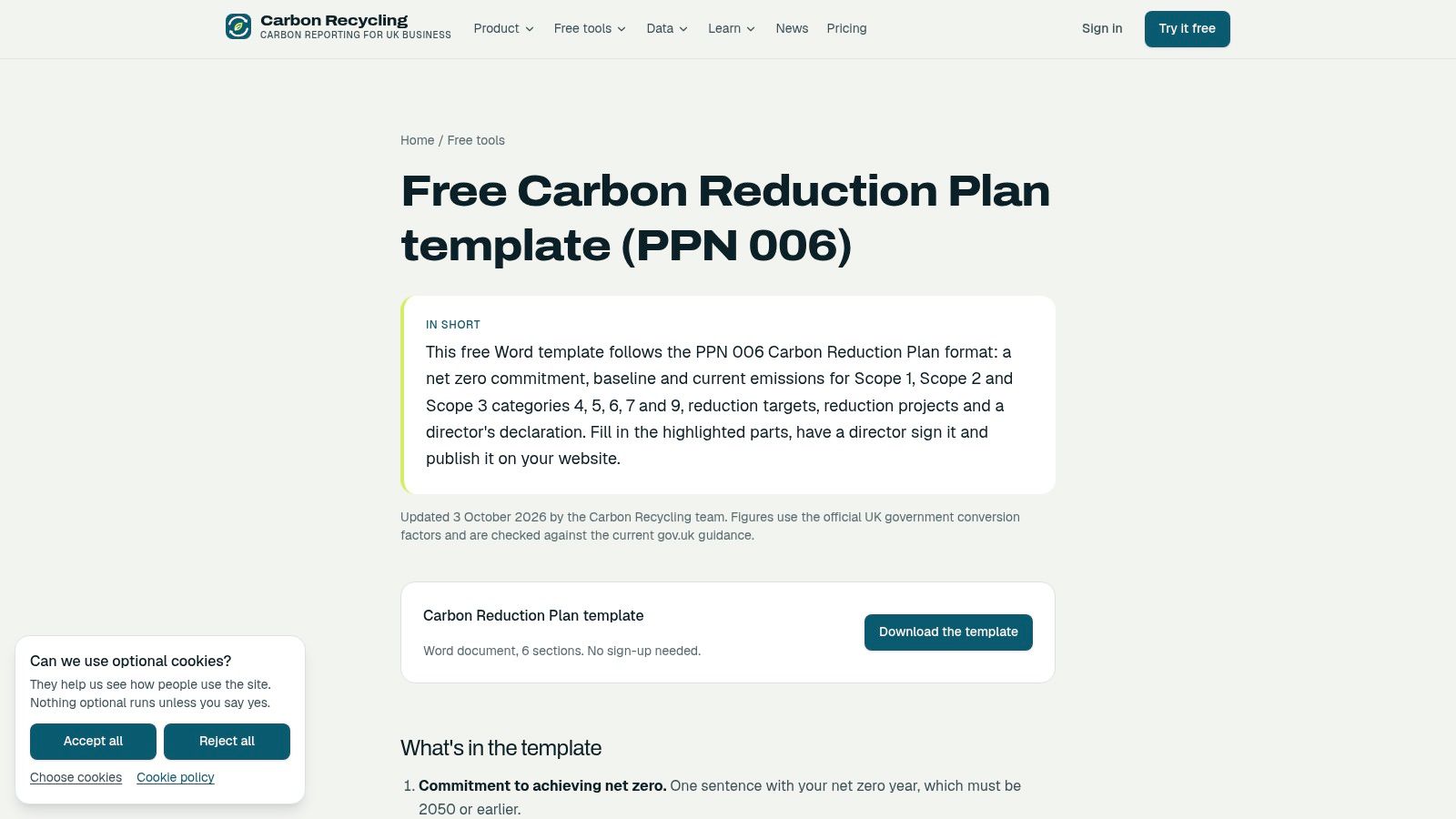
Carbon Recycling's free Word template makes several key CRP tasks visible in the document. Its Carbon Reduction Plan template includes space for baseline and current-year emissions, targets, reduction projects, estimates, data explanations and director sign-off. That gives a small supplier a useful prompt list before it starts gathering information.
The template's stated update date can help you check when the provider says it was revised. Don't assume a recent date means its format or categories automatically match the buyer's current requirements. Compare the document with the official PPN 006 materials before you submit it.
Use it to organise the inputs:
- Baseline and current-year figures: Check that both periods use a consistent boundary and reporting method.
- Estimates and data notes: Explain which figures are estimated, what method you used and where the supporting records sit.
- Projects and targets: Name the action, delivery owner, timing and expected emissions effect.
- Approval: Leave time for the director or authorised signatory to review and approve the final version.
The Word format and no-sign-up download, as described by the provider, may make it easy to get started. But this is a third-party template, and the document doesn't establish whether your category coverage, calculations or evidence are correct. Choose it if you want the fields gathered in one editable file and have someone on your team who can check the technical content.
5. Carbon Verify Guided CRP Builder
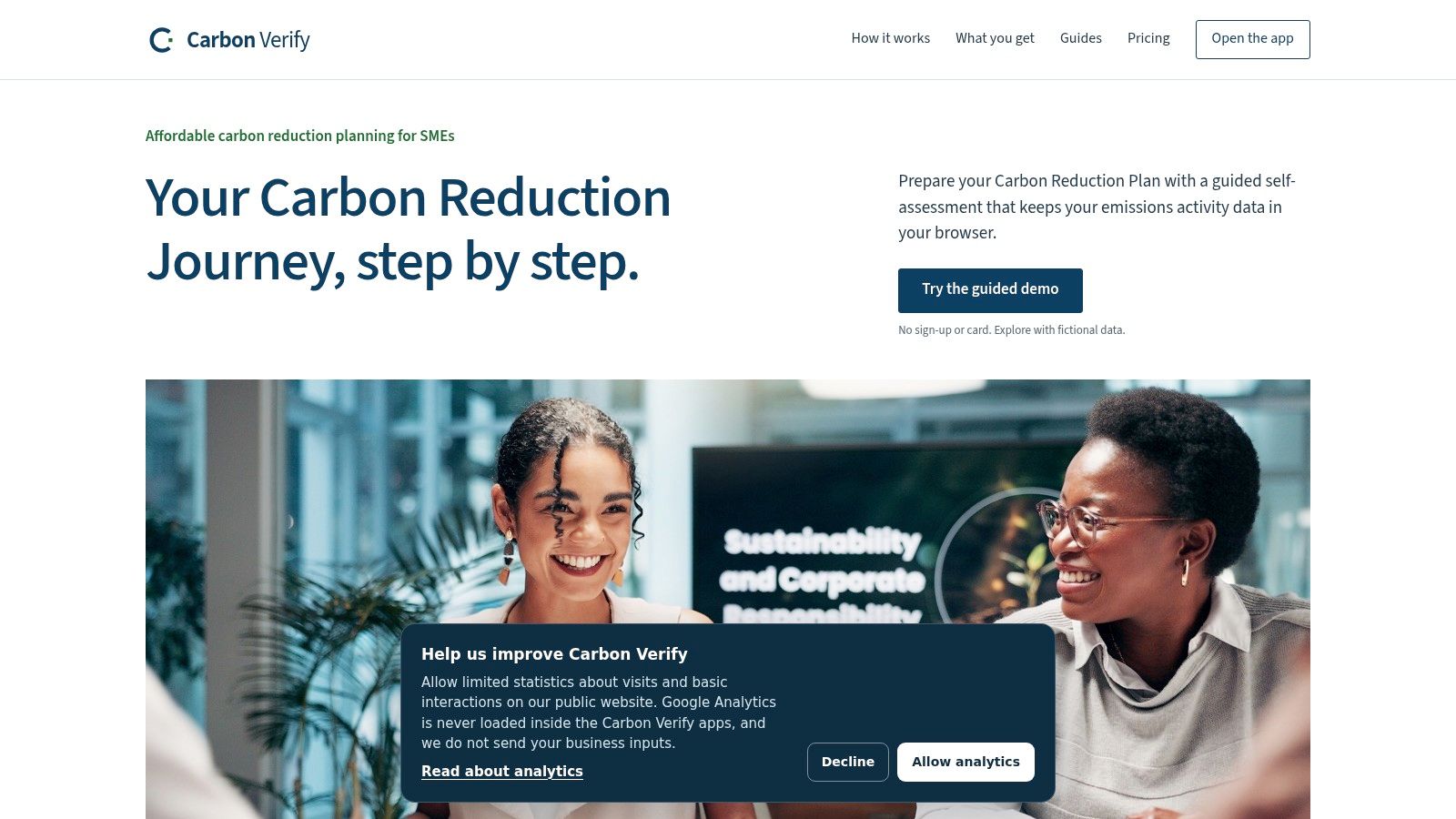
A guided builder can be easier to complete than a blank document when a team needs prompts and a consistent workflow. Carbon Verify says its CRP builder produces a Carbon Reduction Plan and evidence pack from information entered by the user, with downloads available in Word or website-ready HTML.
The provider says the process runs in the user's browser, doesn't require carbon-data uploads and uses UK government conversion factors. Check the current factor set and calculation approach before relying on the output, and confirm how the tool handles your boundary, reporting year and any incomplete inputs. A generated file can still carry omissions or mistakes from the information supplied.
A polished output is not a checked inventory. Review the source records and calculations, not just the exported plan.
What to verify before using the output
Confirm that the generated plan covers the buyer's required sections and that its reporting period is consistent across the emissions data. Check each output figure against the underlying activity data and retain the records used to calculate it. Make sure any assumptions or estimates are explained in the plan or its supporting evidence.
This is a paid option, unlike a government blank form. It may suit a team that values guided data entry and document generation, particularly if organising an evidence pack is part of the problem. It doesn't outsource responsibility for the completeness or quality of your data, so someone in the organisation still needs to own and approve the final disclosure.
6. PEF Consulting Partners Free Word Template
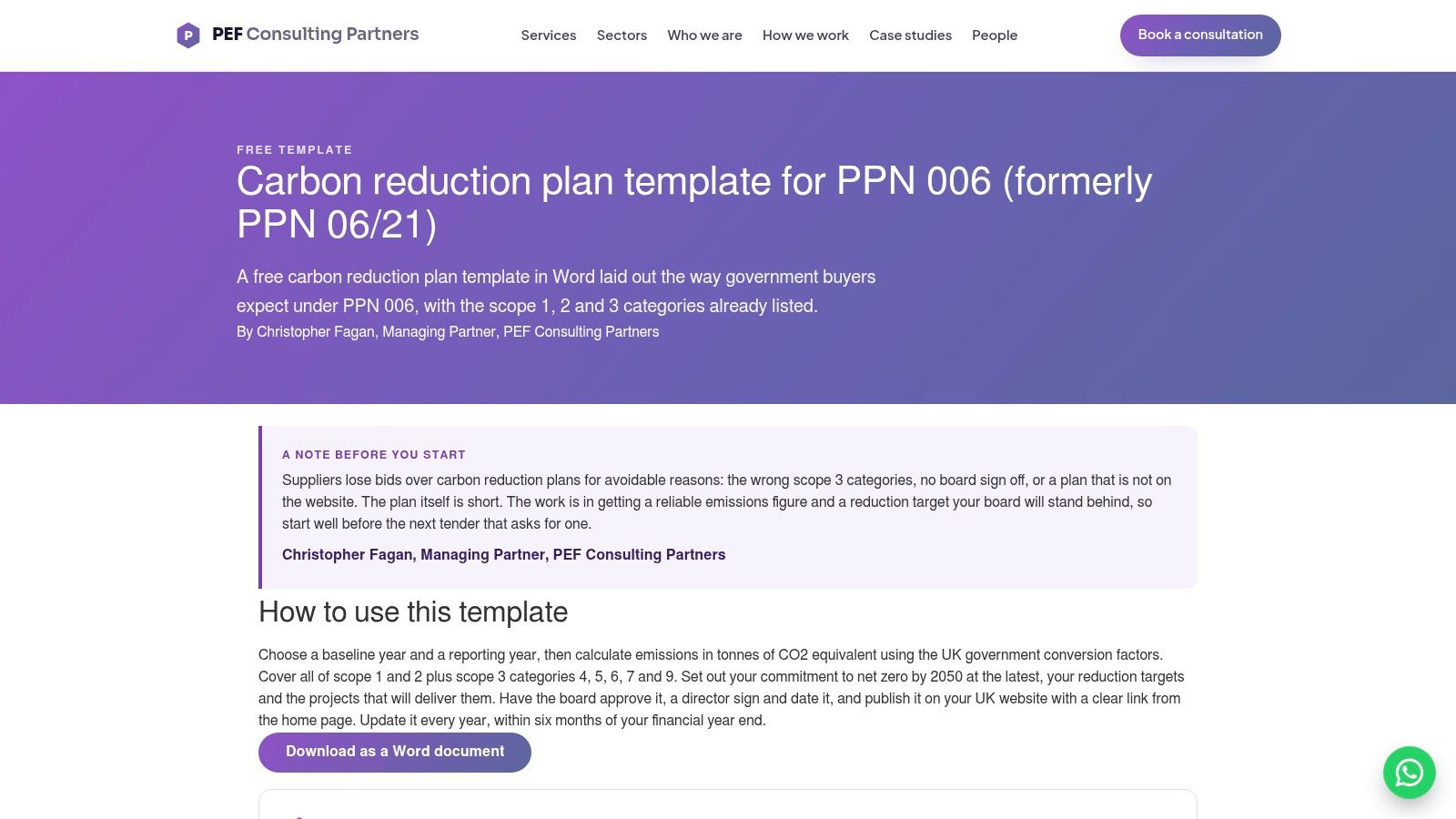
PEF Consulting Partners' editable Word template combines emissions tables with completion notes on baseline and reporting years, UK government conversion factors, reduction projects, approval, publication and annual updating. The PEF Consulting Partners CRP template also identifies Scope 1, Scope 2 and relevant Scope 3 categories, which can help a team spot missing inputs before sign-off.
The extra notes are useful if a bare form leaves your bid team unsure about the order of work. They can prompt someone to think about the reporting period, director approval and keeping the plan up to date. They don't calculate your footprint or substantiate the values in the emissions tables.
Follow the prompts with evidence
For each category, identify the activity data, calculation method and source record. Match the reporting period across energy bills, fuel data and supplier information, and document gaps rather than presenting uncertain inputs as precise measurements. For proposed reductions, connect each action to the source it addresses, then assign an owner and delivery date.
This is a consultancy-produced document rather than the Cabinet Office's original file. Check its fields against the current official format and the tender documents before using it. The template is offered without a stated fee, but you'll still need your own technical review and evidence trail. It's a practical choice for teams that want completion notes in Word and can prepare and check their own emissions data.
7. Seedling CRP Guidance Template and Support
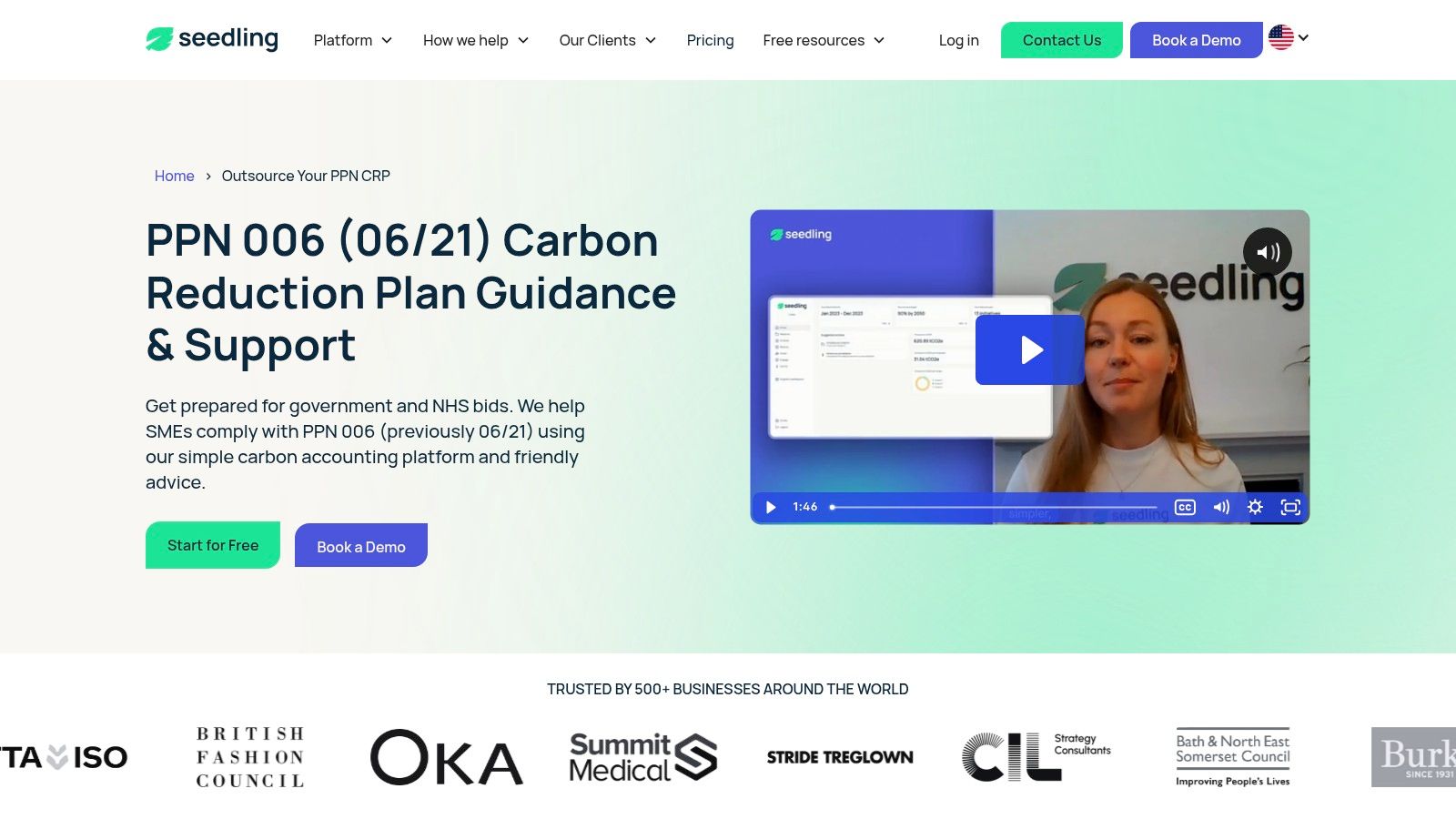
Seedling offers a free guidance template alongside a carbon-accounting platform and one-to-one support. Its CRP guidance for public-sector and NHS suppliers creates a route from a basic starting document to more assisted preparation, which may suit an SME with limited in-house sustainability capacity.
The free template is separate from the platform and support. Check the terms and fees for any paid service before deciding how much work to outsource. The provider's success claims are not independent assurance, and the page uses both current and older PPN terminology, so check your buyer's current instructions rather than relying on a label alone.
Before adopting the output, check:
- Coverage: Does the plan address the applicable PPN 006 sections and reporting boundary?
- Data: Can you trace every figure to an activity record, calculation or supplier source?
- Ownership: Who will provide missing information and approve the final version?
- Ongoing control: Who will maintain the records and prepare the next update?
The main advantage is the step-up in support when a blank form isn't enough. The trade-off is that you'll need to understand what the free resource includes and what requires a platform or service. Keep ownership of the underlying data and final sign-off inside your organisation, even if you use external support to collect or present it.
8. LUPC / UKUPC RP Network Expanded CRP Template
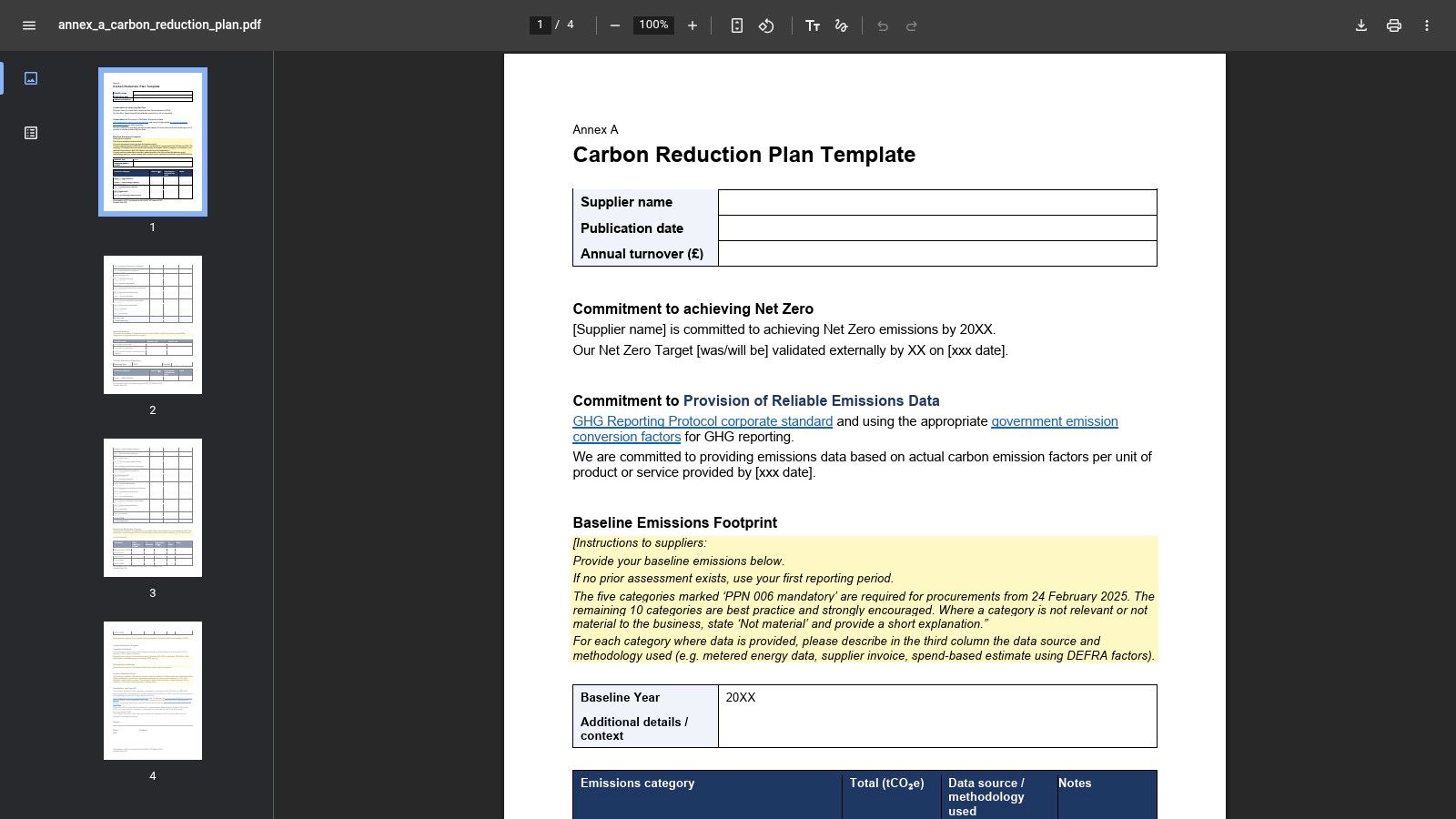
The London Universities Purchasing Consortium and UKUPC RP Network's PDF template is more detailed than a basic fill-in form. The expanded Carbon Reduction Plan template includes fields for data sources and calculation methodology, and distinguishes required PPN 006 categories from additional Scope 3 categories described in the document as best practice.
That distinction can help procurement and sustainability teams separate the required disclosure from information they may want to collect for wider supplier engagement. The added fields also make assumptions and calculation methods easier to record. The trade-off is effort: more categories and methodology prompts mean more information to assemble and review.
Don't confuse expanded coverage with buyer acceptance. Check the tender documents before submitting a third-party format.
Keep the scope clear
Use the template's source and method fields to record how each figure was produced. Identify whether the information is measured or estimated, who provided it and what evidence supports it. For additional categories, make clear which are reported as a broader practice rather than presenting every requested field as a PPN 006 requirement.
The PDF is free to access, but it isn't the Cabinet Office's official template. Confirm the latest official requirements and whether your buyer accepts this format. It's a strong option for organisations that want a more traceable inventory process, provided they can manage the additional data collection and keep the mandatory disclosure distinct from optional detail.
9. Trident Utilities CRP Template and Four-Step Guide
Trident Utilities presents its resource as a four-step process: establish an emissions baseline, set targets, align the plan with procurement needs and keep the plan active. The Trident Utilities CRP guide and template may help a bid team organise those tasks before it starts filling in the form.
Access requires registration, so allow for that when gathering resources under deadline pressure. The provider frames the guide for public procurement and business objectives, making it relevant to suppliers that want to connect their CRP with operational energy work. But it doesn't perform the supplier's emissions calculations or independently check them.
Use the four-step structure as a work plan: appoint someone to gather energy and activity records, agree the baseline and calculation approach, identify reductions that are relevant to the contract, and schedule review and approval. Then compare the template's fields with the current official PPN 006 form and the buyer's tender instructions.
The free resource can make the preparation sequence easier to follow, especially if your team needs to connect emissions data with practical energy measures. Its exact fields still need checking against the official format. Choose it for process guidance, not as a substitute for a compliant disclosure, evidence trail or internal review.
10. ESG Consulting
A supplier may have a template but still lack a defensible emissions inventory, clear ownership of Scope 3 data, or evidence that planned reductions will apply to contract delivery. ESG Consulting supports Carbon Reduction Plans to the PPN 006 technical standard, with evidence trails designed for scrutiny.
The ESG Consulting team advises on carbon reporting, emissions inventories and net-zero strategy across UK regulatory and voluntary frameworks. For a CRP engagement, a senior consultant can lead the work from scoping to sign-off, supported by sustainability and quality assurance teams. Agree the scope and fee in writing before committing, so both sides know what the engagement includes.
Map the plan to the contract
Connect the corporate inventory to the goods, services or works in the bid. Identify relevant contract-level emissions, assign owners to reduction measures, decide what evidence to retain and set a review process. These steps help distinguish company-wide ambition from actions the supplier can apply to the contract.
A consultancy may not be needed if your inventory is complete and your team can calculate, evidence and approve the plan. An official blank form may then be sufficient. If emissions boundaries, estimates or contract measures are unresolved, support can help clarify what applies and make the disclosure more traceable. The supplier must still provide the underlying data and evidence, and check the completed plan against the buyer's requirements.
How the carbon reduction plan templates compare on format, cost and best use
| Item | File format | Cost | Best for |
|---|---|---|---|
| Cabinet Office / GOV.UK, Official PPN 006 Template | ODT | Free | Suppliers needing the official government template and guidance |
| Government Commercial Agency (GCA), CRP Guide and Template | Online guide and downloadable template | Free | Suppliers wanting step-by-step guidance and examples |
| The Carbon Stamp, PPN 006 Template and Support | Word and PDF | Template free; optional paid support | Users wanting an editable template with optional hands-on help |
| Carbon Recycling, Free Word CRP Template | Word | Free | Suppliers wanting a structured, editable template |
| Carbon Verify, Guided CRP Builder | Word and HTML | Paid; price not specified | Teams wanting a guided workflow and evidence-pack generation |
| PEF Consulting Partners, Free Word Template | Word | Free | Users wanting completion notes alongside a template |
| Seedling, CRP Guidance Template and Support | Guidance template and online platform | Template free; platform and support fees need checking | SMEs seeking guidance or assisted plan preparation |
| LUPC / UKUPC RP Network, Expanded CRP Template | Free | Organisations wanting methodology and data-source fields | |
| Trident Utilities, CRP Template and Four-Step Guide | Template format not specified | Free; registration required | Suppliers wanting a four-step preparation guide |
| ESG Consulting, Recommended | Consultancy service; format not specified | Pricing not provided | Organisations needing tailored, evidence-led sustainability and compliance support |
Turn the Template Into an Assured Plan
The right carbon reduction plan template is the one that matches the buyer's required format and the evidence your organisation can provide. A blank official form is a sound choice when your emissions calculations are ready. A guided tool may help structure collection and document production. A broader template can support better traceability, while consultancy may be appropriate when your team needs help defining the boundary, resolving data gaps or linking measures to contract delivery.
Before writing a figure, assign a named owner to each part of the disclosure. Decide who confirms the reporting boundary and baseline year, who gathers energy and activity data, who prepares Scope 3 estimates, who checks calculations and who secures director approval. Make clear how you'll handle estimates, missing supplier information, changes to the organisation and any restatement of previous figures. Consistent methods and transparent explanations are more useful than unsupported precision.
Keep an evidence file for every number. That can include bills, fuel records, travel information, supplier data, calculation workbooks, conversion-factor references and review approvals. Note the source and responsible owner alongside each figure, so another person can follow the calculation without reconstructing it from scratch.
Don't let corporate reporting stop at the tender attachment. For measures relevant to the contract, identify the emissions source, the action, the accountable owner, the delivery timing and the evidence you'll retain. Agree how the bid team or contract manager will monitor delivery and what happens if a measure slips or the expected data doesn't arrive. That's the bridge between a plan that qualifies for a bid and one the supplier can put into practice after award.
Finally, diarise the annual review and update process. Check the buyer's requirements, reconcile current-year figures with the previous plan, explain material changes and arrange approval before publication. Choose the template that makes those responsibilities clearest, then use it as a controlled disclosure rather than a one-off document created under deadline pressure.
If your team needs a PPN 006 Carbon Reduction Plan that connects emissions data, evidence and contract-level actions, speak with ESG Consulting. A senior consultant can help scope the reporting work, prepare an auditable plan and guide it through sign-off.