Product carbon footprints calculated to ISO 14067
Some customers need the emissions of a specific product rather than the whole organisation. We calculate product carbon footprints to ISO 14067, using the ISO 14040 and 14044 lifecycle assessment method.
What is a product carbon footprint?
A product carbon footprint is the total greenhouse gas emissions of one unit of a product across its lifecycle, expressed in kilograms of carbon dioxide equivalent. The boundary is either cradle-to-gate, ending when the product leaves the factory, or cradle-to-grave, which adds distribution, use and disposal.
What our product carbon footprints include
- A product carbon footprint for each product or product family, calculated to ISO 14067 with a declared unit and system boundary.
- A lifecycle model covering raw materials, inbound transport, manufacturing and packaging, extended to distribution, use and end of life where the boundary is cradle-to-grave.
- A methodology report stating the data sources, emission factors, allocation rules and assumptions, so a customer or verifier can follow the result.
- Hotspot analysis showing which materials and processes drive the footprint, for product design and sourcing decisions.
Who needs product carbon footprints
- Manufacturers and food producers whose retail or industrial customers ask for emissions per product.
- Suppliers asked for product-level data in a customer request, covered more broadly by supplier carbon reporting.
- Businesses that already hold an organisational carbon footprint and need to break it down by product.
- UK importers of CBAM goods, and UK exporters of them to the EU, who need embedded emissions data per product.
Product emissions data for UK and EU CBAM
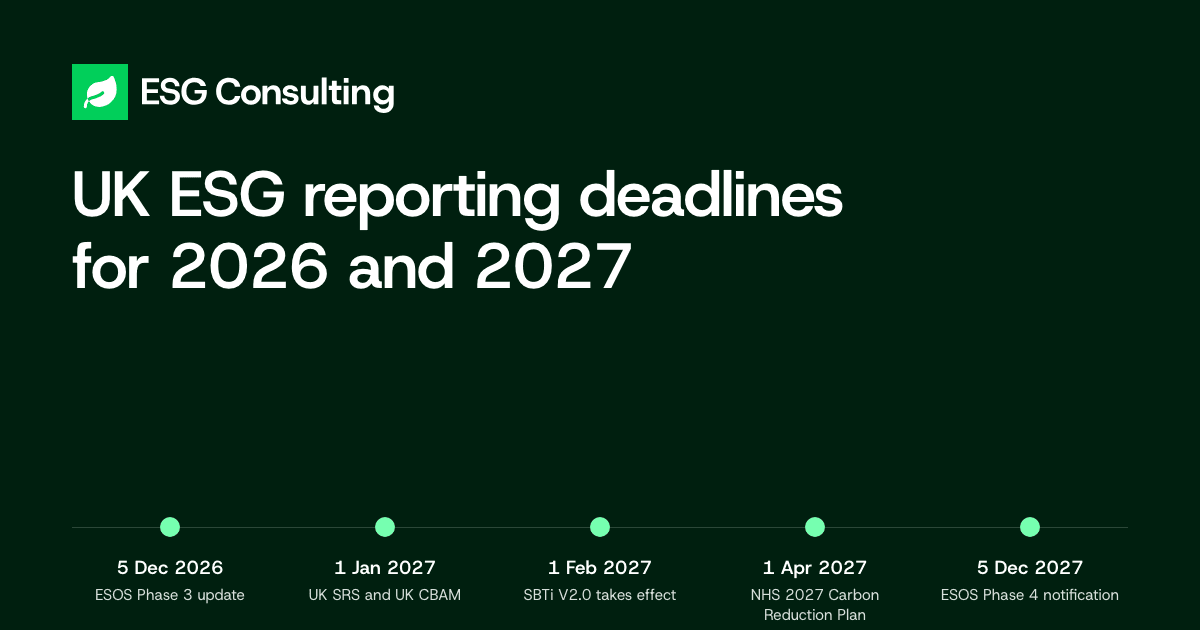
UK CBAM applies from 1 January 2027 to any business that imports aluminium, cement, fertiliser, hydrogen, iron or steel goods worth £50,000 or more in a rolling 12-month period. The charge is based on the embedded emissions of the goods, so importers need verified embedded emissions data per product from their suppliers, or they pay on default values.
EU CBAM entered its definitive period on 1 January 2026. EU customers begin buying certificates from 1 February 2027 and file their first annual declaration by 30 September 2027, so they will ask UK suppliers for embedded emissions data before then. CBAM embedded emissions follow the CBAM calculation rules rather than ISO 14067, but they draw on the same production, energy and materials data that a product carbon footprint collects.
Standards for product carbon footprints
ISO 14067 sets out the requirements for quantifying a product carbon footprint. It builds on ISO 14040 and ISO 14044, the standards for lifecycle assessment. The GHG Protocol Product Standard is an alternative method that some customers specify and we confirm which one the customer expects before modelling starts.
How we calculate a product carbon footprint
- Goal and scope. We agree the products, the declared unit, the boundary and who will use the result.
- Data collection. We collect the bill of materials, energy use by production line, packaging and transport data from the business and its key suppliers.
- Modelling. We build the lifecycle model and calculate the footprint, using primary data for the processes the business controls.
- Reporting. We document the method and results and walk through the hotspots with the product and procurement teams.
Frequently asked questions
How is the carbon footprint of a product calculated?
The product's lifecycle is mapped from raw materials to the end of the agreed boundary. Activity data for each stage - materials in the bill of materials, energy used in production, packaging and transport - is multiplied by an emission factor and the results are summed per declared unit, such as one kilogram or one item.
What is the difference between a product footprint and an organisational footprint?
An organisational footprint covers all of a company's Scope 1, 2 and 3 emissions over a year. A product carbon footprint covers the emissions of one unit of a product across its lifecycle, from raw material extraction to the point the boundary ends. Customers use product footprints to compare suppliers and to calculate their own purchased goods emissions accurately.
What is the difference between cradle-to-gate and cradle-to-grave?
Cradle-to-gate covers raw materials, transport to the factory and manufacturing, ending when the product leaves the gate. Cradle-to-grave adds distribution, use and end-of-life treatment. Business customers usually ask for cradle-to-gate, because they account for what happens after delivery themselves.
What is the difference between a product carbon footprint and a lifecycle assessment?
A lifecycle assessment measures a product's environmental impact across several categories, such as climate change, water use and resource depletion. A product carbon footprint measures one of them - greenhouse gas emissions - using the same lifecycle method.