A Scope 3 emissions inventory complete enough to report against and act on
Scope 3 is usually the largest part of an organisation's footprint and the hardest to measure. We screen all 15 GHG Protocol categories, measure the ones that matter and replace spend-based estimates with supplier data where it changes the answer.
What are Scope 3 emissions?
Scope 3 emissions are the indirect emissions that occur in an organisation's value chain, outside its own operations and the energy it buys. They include the emissions from making the goods and services it purchases, transporting them, its employees' travel and the use and disposal of the products it sells.
Supply chain emissions are the emissions suppliers produce in making and delivering the goods and services an organisation buys. For the buyer they sit in Scope 3, mostly under purchased goods and services, capital goods and upstream transportation. The suppliers measure the same emissions as their own Scope 1, 2 and 3, which is why buyers ask them for data, and our supplier carbon reporting service covers the supplier side of that request.
The 15 Scope 3 categories
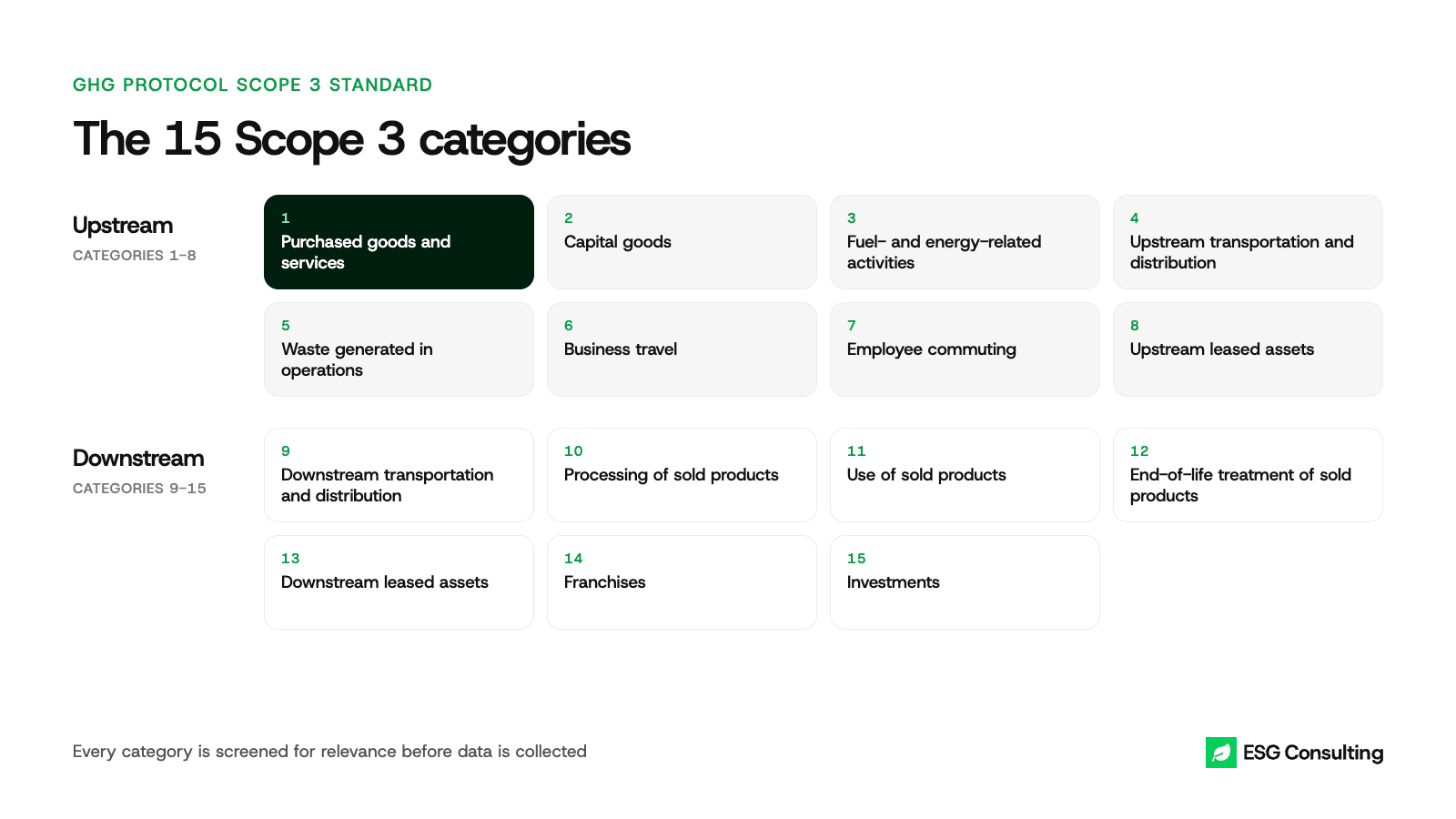
The GHG Protocol Scope 3 Standard divides value chain emissions into eight upstream and seven downstream categories.
Upstream
- Purchased goods and services
- Capital goods
- Fuel and energy-related activities
- Upstream transportation and distribution
- Waste generated in operations
- Business travel
- Employee commuting
- Upstream leased assets
Downstream
- Downstream transportation and distribution
- Processing of sold products
- Use of sold products
- End-of-life treatment of sold products
- Downstream leased assets
- Franchises
- Investments
What our Scope 3 inventory includes
- A relevance screen of all 15 Scope 3 categories, recording the reason for every inclusion and exclusion.
- A Scope 3 inventory for every relevant category, calculated to the GHG Protocol Scope 3 Standard with the data source and method stated for each.
- A supplier engagement plan naming the suppliers that account for most of the purchased emissions and the data to request from each.
- A data improvement plan setting out which spend-based estimates to replace with supplier-specific data first.
Who needs a Scope 3 inventory
- Organisations setting science-based targets, which require Scope 3 targets where it forms a significant share of the footprint.
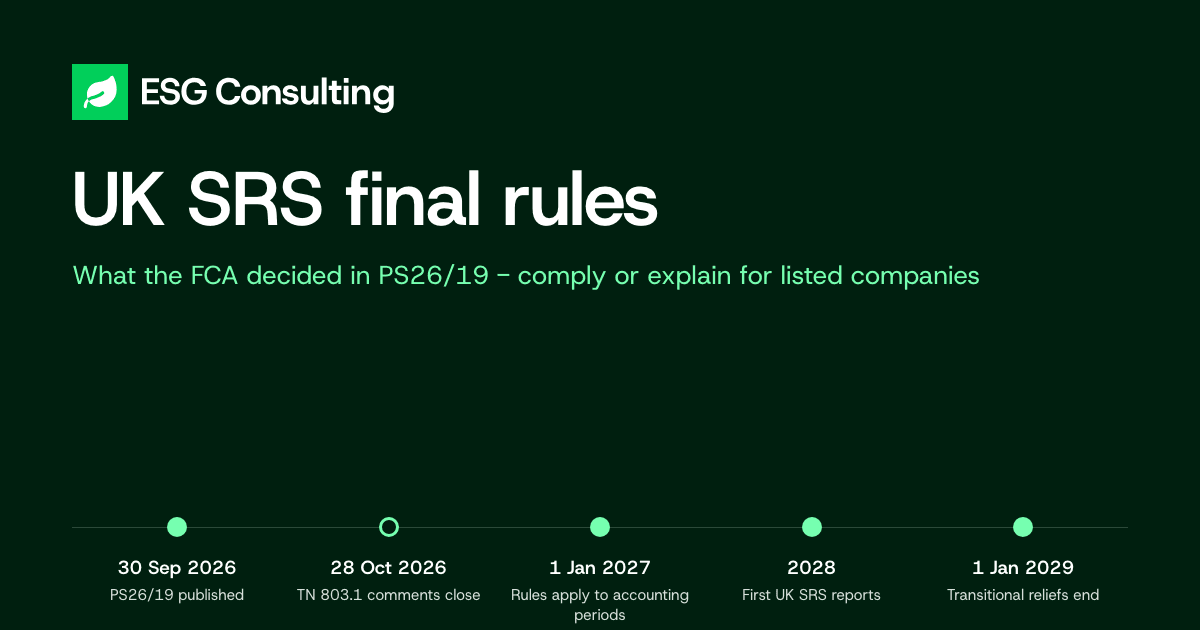
- Listed companies preparing Scope 3 disclosures under UK SRS once the one-year relief ends.
- Companies responding to CDP or building a net-zero strategy that has to address the value chain.
- Suppliers whose customers need emissions data for their own Scope 3, covered by supplier carbon reporting.
How we build a Scope 3 inventory
- Screening. We map the value chain and screen all 15 categories against the purchase ledger, the product range and the business model.
- First inventory. We calculate each relevant category, using activity data where it exists and spend data where it does not.
- Supplier engagement. We contact the suppliers that matter most for their own emissions data and help them provide it.
- Annual improvement. Each year more of the inventory moves from estimates to supplier data and the reductions suppliers achieve start to show in the figures.
Frequently asked questions
What are Scope 1, Scope 2 and Scope 3 emissions?
Scope 1 covers direct emissions from sources an organisation owns or controls, such as its vehicles and gas boilers. Scope 2 covers the emissions from the electricity, heat, steam and cooling it buys. Scope 3 covers all other indirect emissions in its value chain, from the goods it buys to the use and disposal of the products it sells.
Why is Scope 3 so hard to measure?
Scope 3 emissions happen in other organisations, so the data sits with suppliers, customers and employees rather than in the company's own records. Most first inventories rely on spend data and average emission factors and improving them means collecting data from suppliers, some of which do not measure their own footprint yet.
Does every category have to be reported?
No. Each category is screened for relevance and any category that is excluded must be justified. The categories that dominate a footprint vary by sector, which is why we screen all 15 rather than start from a fixed list.
What is the difference between spend-based and supplier-specific data?
Spend-based calculations multiply what an organisation spends with a supplier by an average emission factor for that type of purchase. Supplier-specific data uses the supplier's own emissions. Spend-based figures are a reasonable first baseline, but only supplier-specific data shows the reductions a supplier actually achieves.
Is Scope 3 reporting mandatory in the UK?
SECR does not require Scope 3. Listed companies reporting under the FCA's UK SRS rules from 1 January 2027 have a one-year relief for Scope 3 emissions. In practice most organisations measure Scope 3 because a customer, a public sector tender, CDP or a science-based target requires it.